ครั้งหนึ่ง ธุรกิจจริงของ I AM CHEER คือเครื่องซักผ้าหยอดเหรียญราว 12–13 สาขา (บางสาขามีตู้น้ำมันหยอดเหรียญด้วย) ส่งรายได้เข้ามาทุกเดือน แต่ในเวลาเดียวกัน เงินราว 15,000 บาทต่อเดือนก็ไหลออกไปจ่ายหนี้ ทั้งหนี้ธนาคาร 200,000 บาทที่ดอกเบี้ย 25% ต่อปี และเงิน 400,000 บาทที่กู้โดยใช้ทองเป็นหลักประกันที่ดอกเบี้ยราว 15% ต่อปี เขาไม่ได้กู้เพราะความจำเป็น แต่กู้เพื่อเก็งกำไร
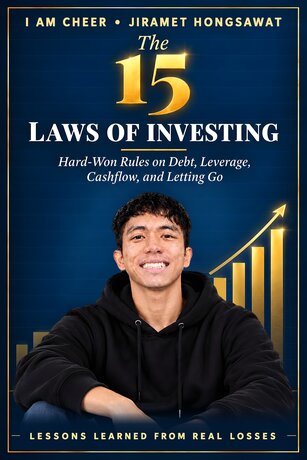
The 15 Laws of Investing คือใบเสร็จค่าเรียนครั้งนั้น แบบแจกแจงทุกรายการ ตลอดหลายปีที่ผ่านมา เขาขาดทุนจากออปชันที่ยังไม่เข้าใจดีพอ จากทองที่นำไปจำนำซ้ำแล้วซ้ำอีก จากผลตอบแทน "dual investment" ของคริปโตที่ไม่เป็นอย่างที่โฆษณา และจากเครื่องบางเครื่องที่ต้นทุนสูงกว่ารายได้ หลังการขาดทุนแต่ละครั้ง เขาเขียนกฎหนึ่งข้อที่จะป้องกันความผิดพลาดนั้นได้ จนวันนี้มีครบ 15 ข้อ
ภายในเล่ม:
- หนีกับดักหนี้: ทำไมต้องปิดหนี้ดอกเบี้ย 25% ก่อน และทำไมไม่ควรมีการเทรดใด ๆ ระหว่างที่ยังมีหนี้แพง
- ใช้เลเวอเรจโดยไม่พัง: การกู้เพื่อลงทุนจะสมเหตุสมผลเมื่อไหร่ (เฉพาะดอกเบี้ย 3–5% และเฉพาะสินทรัพย์จริง) และทำไม LTV ตอนเริ่มต้นจึงเป็นตัวกำหนดว่าคุณจะรอดหรือไม่
- รักษาเงินต้น: ลงทุนเฉพาะสิ่งที่เข้าใจ และเรียนรู้ก่อนจ่าย
- คิดก่อน แล้วป้องกัน: วง "AI Mastermind" ในจินตนาการสำหรับทดสอบการตัดสินใจ และการใช้ออปชันเป็นประกัน
- กระแสเงินสดมาก่อน: ทำไมเครื่องธรรมดา ๆ ที่รอลูกค้า จึงดีกว่าสินทรัพย์ที่ทำให้เราต้องรอราคา
- ปล่อยวาง: การยึดติดกับราคา ต้นทุนจม และศักดิ์ศรี และวันที่เขาตัดสินใจปล่อยทองไป
ทุกบทผสานตัวเลขจริงของผู้เขียนเข้ากับประวัติศาสตร์สั้น ๆ ของเงิน บทเรียนจาก Benjamin Graham, Warren Buffett, Robert Kiyosaki และ Andy Tanner และแบบฝึกหัดที่นำไปใช้ได้จริง ภาคผนวกมีแบบฟอร์มวางแผนปลดหนี้ เช็กลิสต์ก่อนใช้เลเวอเรจ พื้นฐานออปชัน หมายเหตุเรื่องเพดานดอกเบี้ย ทองคำ และภาษีในไทย คลังพรอมต์ AI และงบการเงินส่วนบุคคล ตามด้วยอภิธานศัพท์ แหล่งอ้างอิง และดัชนี
หนังสือเล่มนี้เป็นภาษาอังกฤษ เขียนขึ้นเพื่อการศึกษาและสร้างแรงบันดาลใจ ไม่ใช่คำแนะนำทางการเงิน การลงทุน ภาษี หรือกฎหมาย
At one point, Jiramet "Cheer" Hongsawat's real businesses, about 12–13 branches of coin-operated washing machines (with fuel dispensers at some), were sending him income every month. At the same time, about 15,000 baht a month was flowing straight back out to service debt: 200,000 baht owed to two banks at 25% a year, and 400,000 baht borrowed against gold at about 15%. He hadn't borrowed for a need. He had borrowed to speculate.
The 15 Laws of Investing is the bill for that education, itemized. Over several years, Cheer lost money on options he didn't fully understand, on gold pledged again and again, on crypto "dual investment" yields that didn't deliver, and on a few machines that cost more than they earned. After each loss, he wrote one rule that would have prevented it. There are fifteen of them now.
Inside:
- Escape the debt trap: why 25% debt comes first, and why no clever trade belongs beside it.
- Leverage without ruin: when borrowing to invest can make sense (only at 3–5%, and only for real assets), and why your starting loan-to-value decides how much room you have to survive.
- Guard the principal: invest only in what you understand, and learn before you pay.
- Think, then protect: an imagined "AI Mastermind" panel for testing decisions, and how options can work as insurance.
- Cashflow first: why boring machines that wait for customers beat assets that make you wait for a price.
- Let it go: anchoring, sunk cost and pride, and how Cheer finally let the gold go.
Each law combines Cheer's own numbers with a short history of money, lessons from Benjamin Graham, Warren Buffett, Robert Kiyosaki and Andy Tanner, and practical worksheets. The appendices include a debt payoff worksheet, a leverage checklist, an options primer, Thailand notes on rate ceilings, gold and tax, an AI prompt library and a personal financial statement, followed by a glossary, full notes and sources, and an index.
Written for anyone who has borrowed to chase a return, or is tempted to. The examples come from Thailand, but the laws apply everywhere.
This book is for education and inspiration. It is not financial, investment, tax or legal advice.
ประเภทไฟล์
pdf, epub (สารบัญ)
วันที่วางขาย
26 ตุลาคม 2569
ความยาว
511 หน้า (≈ 103,780 คำ)


 Facebook
 X


 LINE


